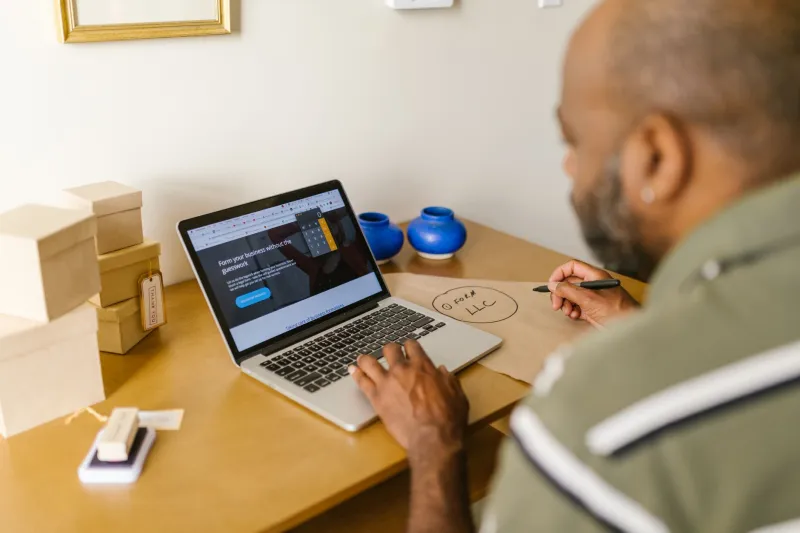
Zero Dollars Up Front, But What Are You Really Paying? The Truth About Free Website Builders
Everybody loves free. It's practically wired into us. So when you're starting a business or launching a side hustle and you stumble across a website builder that promises a fully functional site at absolutely no cost, it's hard not to feel like you've won something.
But here's the thing — building a website isn't quite like grabbing a free sample at Costco. There's almost always a catch, and sometimes that catch is buried so deep in the terms of service that most people don't find it until they're already locked in.
Let's talk about what "free" really means in the website builder world, and how to figure out whether you're getting a deal or getting played.
Your Data Is Part of the Deal
When a product is free, you're often the product — and that's just as true for website builders as it is for social media platforms.
Many zero-cost plans quietly collect behavioral data about you and your visitors. That information can be used to improve the platform, sure, but it can also feed advertising ecosystems that have nothing to do with your business goals. Some builders even place third-party ads directly on your free site — ads you don't control, don't profit from, and that your visitors absolutely notice.
For a personal blog or a hobby project, that trade-off might feel worth it. But if you're trying to build a credible business presence, having random ads pop up between your services page and your contact form is the kind of thing that quietly erodes trust before a customer even reaches out.
The Branding Tax Nobody Talks About
Free plans almost universally come with the builder's branding plastered somewhere on your site. You'll get a domain that looks something like yourbusiness.wixsite.com or yourname.wordpress.com instead of a clean yourbusiness.com.
This isn't just an aesthetic issue. Studies on consumer trust consistently show that visitors are more skeptical of businesses without custom domains. In a world where people Google everything before they buy, a subdomain can signal that your business isn't quite serious yet — even if you absolutely are.
Custom domain access is one of the first things that goes behind a paywall on nearly every major platform. So you're essentially paying for your brand's credibility the moment you want to look professional.
Scalability Ceilings Are Real — and They Sneak Up on You
Maybe you launch your free site and things are going great. Traffic is building, you're getting inquiries, and then one day you want to add an online store, or set up an email capture form that actually connects to your CRM, or start selling digital downloads.
Surprise: those features aren't in the free tier.
This is where the real cost of free website builders gets painful. The upgrade walls aren't always visible when you're signing up. You build your whole site around a platform's ecosystem — your templates, your content, your SEO structure — and then discover that everything you actually need to grow requires a paid plan that might run anywhere from $12 to $45 a month, depending on the platform.
That's not inherently wrong. Platforms need to make money. But the way the free tier is designed often makes you feel like you're getting a complete product when you're really just getting a very long free trial with a lot of friction built in.
Vendor Lock-In: The Invisible Fence
Here's a scenario worth thinking through: you spend six months building out your site on a free platform. You've customized templates, written dozens of pages, optimized your images, and started ranking in local search results. Then the platform raises its prices, changes its features, or just doesn't fit your needs anymore.
Can you leave?
Technically, yes. Practically, it's complicated. Most website builders don't make it easy to export your content in a format that plays nicely with other platforms. Your design won't transfer. Your SEO settings might not migrate cleanly. You could end up essentially starting over — losing months of work and any search ranking momentum you'd built.
Vendor lock-in is one of the most underappreciated risks of free website builders, and it's one that only becomes obvious after you've already invested significant time.
Storage and Bandwidth Limits
Free plans almost always cap how much you can upload and how much traffic your site can handle before things start to slow down or break. For a site with a handful of pages and a few photos, that's fine. But the moment you start adding product images, video content, or a portfolio gallery, you'll hit those limits faster than you'd expect.
And when you do? Another upgrade prompt is waiting.
So When Does Free Actually Make Sense?
To be fair, free tiers aren't all bad. If you're testing an idea, building a temporary landing page, or just learning how website builders work before committing, a free plan is a perfectly reasonable place to start. The EditMySite philosophy has always been that getting started matters — and sometimes free is the right on-ramp.
The key is going in with clear eyes. Ask yourself:
- What happens when I want a custom domain? Price it out now.
- Does this platform show ads on my site? Read the fine print.
- What features will I realistically need in the next 12 months? Check whether those are in the free tier.
- How hard is it to migrate away if I need to? Look for export options before you build.
The Total Cost of Ownership Mindset
The smartest move any non-technical site owner can make is to think about total cost of ownership, not just the sign-up price. Add up what you'll actually need — custom domain, ad-free experience, e-commerce tools, email integrations — and see what that really costs across the platforms you're considering.
You might find that a $12/month paid plan on a builder with great scalability is actually a better deal than a "free" plan that nickels and dimes you every time your business takes a step forward.
Building your own website is one of the most empowering things you can do for your business. Just make sure the platform you choose is working with your goals — not quietly working against them.