Why Not Knowing Design Rules Might Actually Be Your Biggest Advantage

Let's say something a little controversial right out of the gate: you might build a better website than a professional designer.
Not because you have more technical skill. Not because you know the difference between kerning and tracking, or because you've memorized the principles of Gestalt theory. But because you are, in the most literal sense, your own customer — and that gives you a kind of empathy that's genuinely hard to replicate.
This isn't just a feel-good take. There's real reasoning behind it, and if you've been holding back from building or updating your own site because you don't feel "qualified," this piece is for you.
The Problem With Knowing Too Much
Professional designers are trained to see websites differently than regular people use them. They notice alignment. They obsess over whitespace. They have strong opinions about font pairings and color theory and whether a button should be rounded or square.
None of that is bad. But it can lead to a specific kind of blind spot: optimizing for how a site looks rather than how it works.
There's a well-documented phenomenon in UX research called the "curse of knowledge" — the idea that the more you know about something, the harder it becomes to imagine not knowing it. A designer who lives and breathes web aesthetics can lose touch with the experience of a first-time visitor who just wants to know what you sell and how much it costs.
Non-designers don't have that problem. When you're building your own site and you ask yourself, "Would I know what to do next if I landed on this page?" — that question comes from a completely genuine place.
You Think Like Your Customer Because You Are One
Here's something worth sitting with: the people most likely to visit your website are people a lot like you. They're busy. They're skeptical. They're scanning, not reading. They want answers fast and they'll leave if they don't find them.
When a non-technical founder builds their own site, they tend to write copy that sounds like a real person, organize information in the order that actually makes sense, and skip the jargon that designers and marketers sometimes default to.
Think about the small business websites you've visited that felt immediately warm and trustworthy — a local bakery, a freelance photographer, a family-run landscaping company. Odds are at least a few of those were built by the owner, not a professional agency. That authenticity isn't accidental. It's the direct result of someone who genuinely cares about their customers building the thing themselves.
What the Research Actually Says About Conversion
Conversion rate optimization (CRO) research has produced some findings that might surprise you.
Studies consistently show that simpler websites tend to convert better than complex ones. Pages with fewer choices outperform pages with many options — a concept called Hick's Law. Clear, plain-language CTAs beat clever or design-forward ones. And trust signals like real photos, genuine testimonials, and transparent pricing matter far more to visitors than visual sophistication.
Non-designers naturally gravitate toward simplicity — not because they've read the research, but because complexity feels overwhelming to them too. When you don't know how to add ten fancy features, you add the three that matter. When you don't have a library of stock photography to choose from, you use a real photo of yourself or your product. These instincts, it turns out, are pretty much exactly what conversion science recommends.
The Confidence Trap — And How to Step Around It
The biggest obstacle most non-designers face isn't ability. It's confidence. There's a persistent cultural narrative that says websites require technical expertise, and that if you don't have that expertise, whatever you build will be embarrassing or ineffective.
That narrative is outdated, and it's worth actively challenging.
Modern website builders — the tools that EditMySite exists to help you navigate — have genuinely democratized web design. The templates available today are built on solid UX research. The drag-and-drop interfaces are designed to steer you toward layouts that work. The defaults are better than they've ever been.
Your job isn't to override those defaults with your design vision. Your job is to fill them with your authentic voice, your real story, and the specific information your customers are looking for.
Practical Principles for Building With Confidence
If you're a non-designer building your own site, here are a few principles that'll serve you better than any design tutorial:
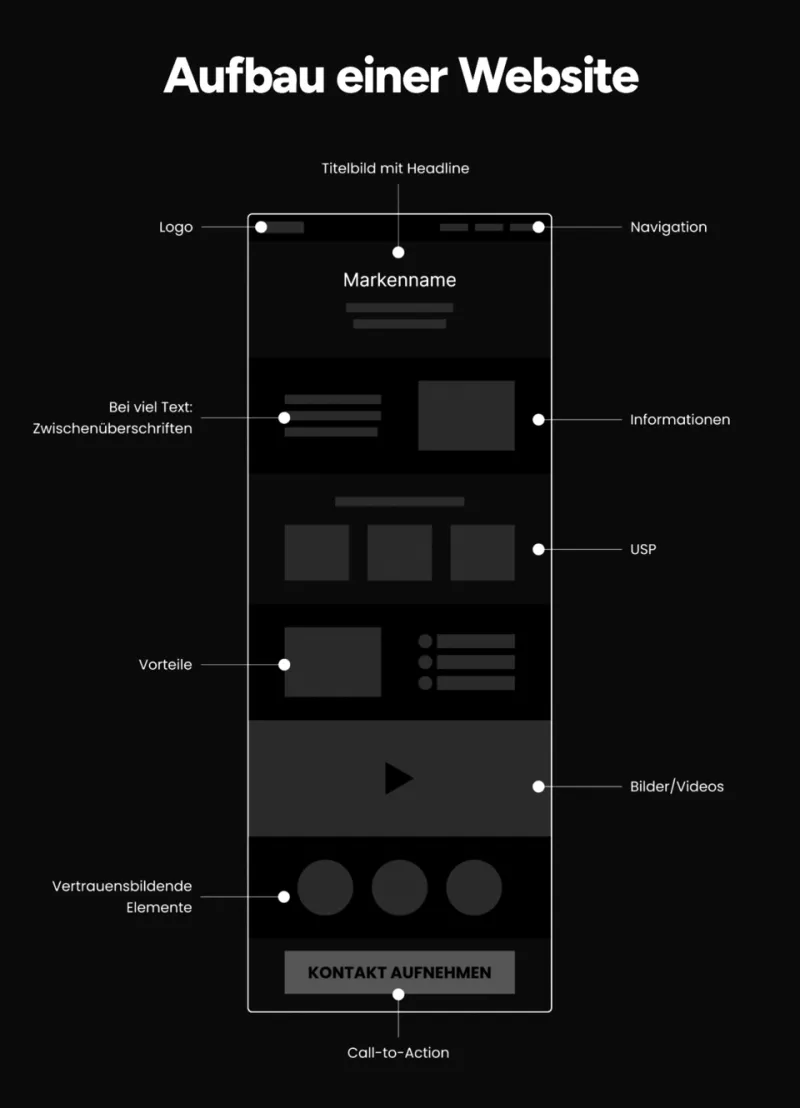
Lead with clarity, not cleverness. Your homepage headline should tell a visitor exactly what you do and who you do it for within five seconds. Not clever wordplay. Not a vague mission statement. Just: here's what I offer, here's who it's for, here's what to do next.
Use your own words. Write your copy the way you'd explain your business to a friend. Then read it out loud. If it sounds like a brochure, rewrite it until it sounds like a person.
Make the next step obvious. Every page should have one clear thing you want the visitor to do. Call you. Book a consultation. Buy a product. Subscribe to your list. One thing. Make it easy to find and impossible to miss.
Trust your gut on what's confusing. If something on your site confuses you, it will confuse your visitors. You don't need a usability study to fix it — you just need to trust that instinct.
Real photos beat stock photos. Every time. A slightly imperfect photo of your actual product, space, or face will outperform a polished generic image from a stock library. People are wired to detect authenticity.
The Best Website Is the One That Actually Gets Built
Here's the real bottom line: a site built by someone who cares deeply about their customers, communicates clearly, and keeps things simple will almost always outperform a beautiful site that no one can navigate.
You don't need to know design rules to build something that works. You need to know your customer — and if you're building your own business, there's a very good chance you already do.
So stop waiting until you feel qualified. Start building. Edit as you go. Your instincts are better than you think.